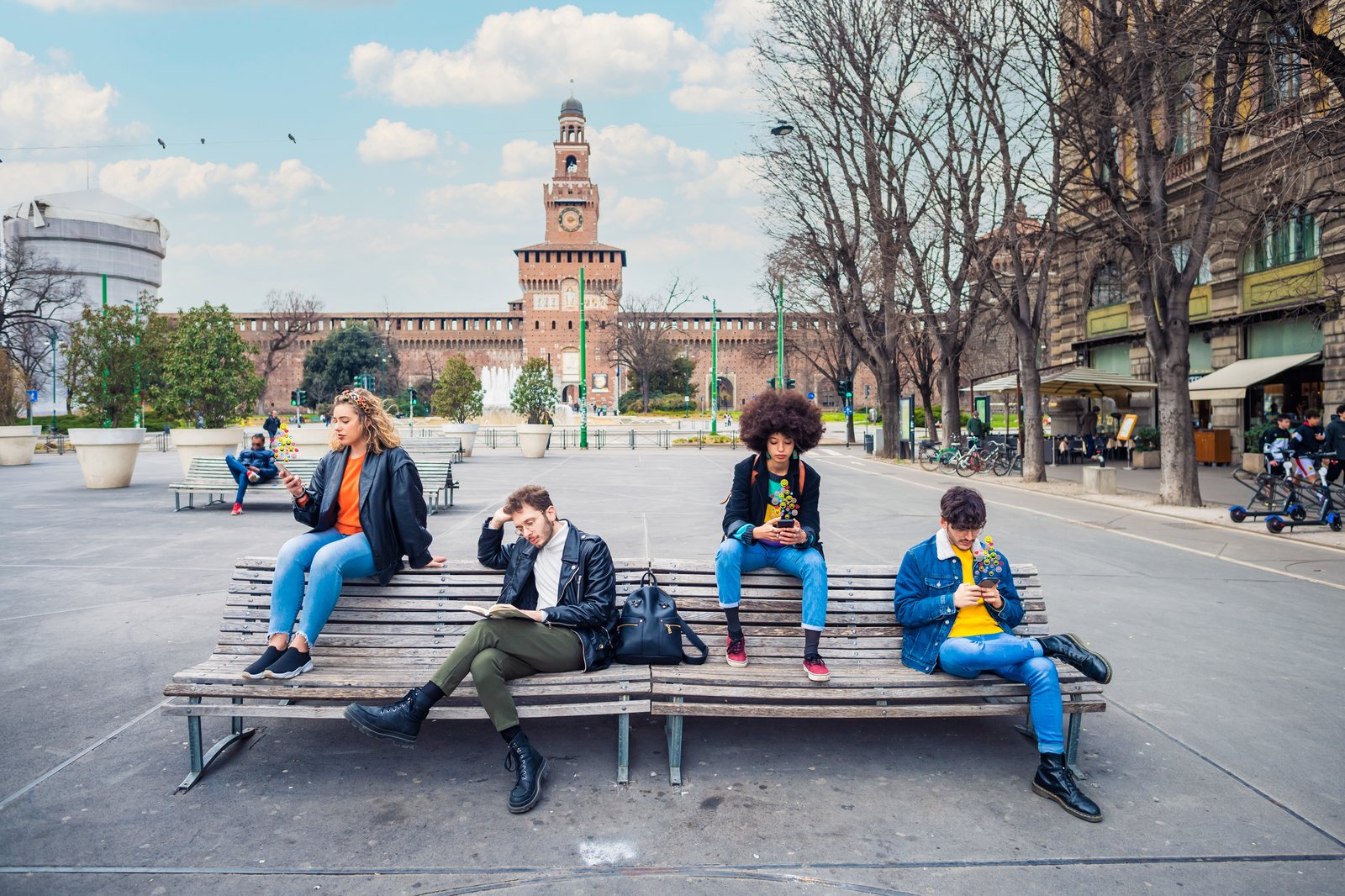
It is a Tuesday evening in Rome. A student from Dhaka finishes a lecture in English at Sapienza, walks twenty minutes to Tor Pignattara, and buys onions, green chillies and a kilo of halal mutton from a shopkeeper who greets him in Bangla. That combination — an Italian degree in the morning, a Bangladeshi neighbourhood in the evening — is what daily student life in Italy for Bangladeshi students actually looks like in 2027, and it is almost never described honestly online.
Student life in Italy for Bangladeshi students in 2027 means paying a minimum €700 a year to join the national health service, eating cheaply in subsidised university canteens, buying discounted transport passes (Milan's under-27 annual pass is €200), and living near one of Europe's largest Bangladeshi communities — over 150,000 residents, with the EU's biggest concentration in Rome.
What is student life in Italy really like for Bangladeshi students?
Busier and more independent than most families expect. Italian universities do very little hand-holding: there is rarely a residential campus, almost no compulsory attendance in many programmes, and exams that are frequently oral. You find your own room, cook your own food, register yourself with the health service, and manage your own study rhythm between long gaps in the timetable.
The upside is that the city becomes your campus. Bologna, Padua, Milan, Turin and Rome all have student districts where rent, food and transport are priced for people your age, and where the working day genuinely ends — shops close, families eat together, and the evening passeggiata is free entertainment. Students who arrive expecting a structured, dormitory-style experience struggle for a term; students who arrive expecting a city to figure out settle much faster.
How big is the Bangladeshi community in Italy — and where does it live?
Large, young, and heavily concentrated. The Italian Ministry of Labour and Social Policies publishes an annual report on the Bangladeshi community in Italy, and its figures are the most reliable public numbers available: 150,692 legally resident Bangladeshi nationals as of 1 January 2022, an 8.8% rise in a single year, making it the eighth-largest non-EU community in the country.
The concentration matters more than the total. Lazio hosts 27.2% of all Bangladeshis in Italy, and metropolitan Rome alone holds 38,004 people — the largest Bangladeshi community in the entire European Union. The same report records that 57.3% of the community is under 35, that 29.7% work in hotels and restaurants and 29.3% in commerce, and that there were 30,700 Bangladeshi-run sole proprietorships in Italy at the end of 2021, 64.1% of them in trade. That last number is why the grocery shop near your flat is often Bangladeshi-owned.
| Region | Share | Student cities there |
|---|---|---|
| Lazio | 27.2% | Rome — Sapienza, Tor Vergata, Roma Tre |
| Lombardy | 15.7% | Milan, Pavia, Bergamo, Brescia |
| Veneto | 12.4% | Padua, Venice, Verona |
| Campania | 6.6% | Naples |
| Sicily | 6.0% | Palermo, Catania |
Practically, this means a Bangladeshi student in Rome, Milan or Padua is rarely isolated: there are Bangla-speaking shops, mosques, cricket groups and community associations within reach. A student in a small Tuscan or Calabrian university town may be the only Bangladeshi for many kilometres. Neither is wrong — but they are very different first years, and it is worth choosing deliberately rather than by accident.

What health cover do you need, and why does €700 decide your permesso length?
Every non-EU student in Italy must hold either national health service (SSN) registration or valid private health insurance — and the choice quietly controls how long your residence permit lasts. The University of Bologna states the rule plainly: in no case will the issued residence permit be longer than your health insurance or registration with the SSN.
For a student residence permit, voluntary SSN registration costs a minimum lump sum of €700 per calendar year (about ৳98,800 at ৳141.13/€ on 31 July 2026). It runs from 1 January to 31 December and cannot be pro-rated — register in September and you still pay the full €700 for cover ending 31 December. Dependent family members cost a minimum of €2,000 a year.
If you arrive in September and pay for only the current calendar year, your health cover ends on 31 December — and your permesso di soggiorno can be issued to match that short window instead of a full year. Italian universities therefore advise paying for two consecutive calendar years in two separate F24 payments so your cover spans the academic year. Getting this wrong means renewing your permit in the middle of your first semester.
Payment is made on an F24 form at a post office, bank or through online banking, using fee code (codice tributo) 8846 and your region's code — 06 for Emilia-Romagna, 21 for Veneto, and so on. Crucially, paying is not registering: you must then take the receipt to a local health authority (AUSL/ASL) Sportello Unico desk with your passport, codice fiscale, enrolment certificate and residence-permit receipt, and choose a general practitioner. Your tessera sanitaria health card is then posted to the address you gave the tax agency.
| Feature | SSN | Private |
|---|---|---|
| Yearly cost | From €700 | Varies widely |
| Free family doctor | Yes | No |
| Pay upfront, claim later | No | Usually yes |
| Same cover as Italians | Yes | No |
| Accepted for permesso | Yes | Yes |
One reassurance worth knowing before you fly: emergency care at a public hospital's pronto soccorso is available even if your registration is not yet active, and 118 is the free national emergency number.
What do students actually eat — and is halal food easy to find?
Two food systems run in parallel, and using both is how students eat well on very little. The first is the university canteen network — the mensa — run by each region's right-to-study agency. A full tray meal is sold at differentiated rates depending on your income assessment, and students who win a regional DSU grant typically eat free or for a token amount. Reported student prices commonly fall in the €2–€7 range depending on region and income band, though the exact tariff is set locally and changes each academic year.
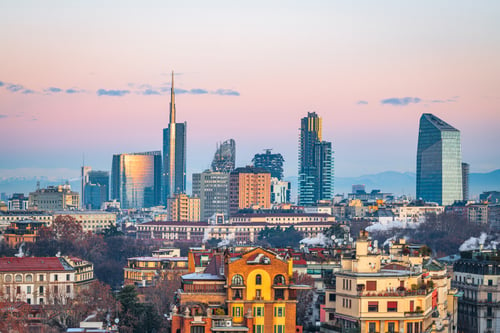
The second system is the community. Milan's Via Padova corridor, running north-east from Piazzale Loreto, is lined with halal butchers, South Asian grocers and Bangladeshi, Pakistani and Egyptian restaurants. In Rome, Tor Pignattara and Centocelle serve the same role for the city's large Bangladeshi population. Milan's main mosque, the Centro Islamico di Milano e Lombardia on Viale Jenner, has operated since 1988, and smaller prayer rooms and community centres — including Bangladeshi-run ones — are spread across both cities.
The students who manage best in Italy are not the ones with the biggest budgets — they are the ones who use the mensa at lunch, cook in the evening from a South Asian grocer rather than a supermarket, and buy an annual transport pass instead of single tickets. Those three habits alone routinely separate a comfortable month from a stressful one.
Be realistic about smaller cities, though. Outside the big metropolitan areas, halal meat may mean a weekend trip or an online order, and pork and wine are simply present in ordinary Italian social life. Most students find their own workable balance quickly; it is worth thinking about in advance rather than discovering it in week one.
How much does getting around cost a student in Italy?
Far less than most families assume, because Italian cities price transport aggressively for young people. Milan's operator ATM publishes its youth fares openly: in its January 2026 tariff guide, the urban annual pass for anyone under 27 costs €200 against an ordinary fare of €330, and the monthly pass is €22 against €39. Students under 30 with a household income indicator (ISEE) below €28,000 pay the same reduced prices, and evening students pay €11 a month.
At ৳141.13 to the euro, €200 for a year of unlimited city transport is roughly ৳28,200 — about ৳2,350 a month. The physical travel card costs €10 and lasts four years, and holders of an annual pass also get discounts through ATM's Carta Club and on the BikeMi cycle-hire scheme. Other cities run their own comparable youth schemes at their own prices, and many university towns are small enough to walk or cycle entirely.
Do you need Italian if your degree is taught in English?
Yes — not for your degree, but for your life. Italy now offers hundreds of English-taught programmes, and you can complete a full masters without an Italian exam. Off campus is a different country. Health desks, the Questura, letting agents, part-time employers, bank branches and most landlords operate in Italian only, and forms are rarely translated.
Students who reach a comfortable A2–B1 level within their first year consistently report a better experience: they get better rooms, better part-time work, and far less dependence on intermediaries. Most universities run free or heavily subsidised Italian courses for international students, and starting one in your first month is one of the highest-return decisions you can make.
Bangladesh is the single largest destination for money sent out of Italy, accounting for around 15% of all outbound remittances and exceeding €1 billion a year, according to the Ministry of Labour's community report. Italy is not a new or untested destination for Bangladeshi families — it is one of the most established Bangladeshi corridors in Europe.
What does the first month actually involve?
A short, strict sequence — and the order matters more than the speed.
- Apply for your permesso di soggiorno within 8 working days of arrival. This is a hard legal deadline, not a guideline. The post-office receipt is what you use as proof until the card is issued.
- Get your codice fiscale from the Agenzia delle Entrate. It is free, it takes minutes, and nothing else — bank, health card, phone contract, rental contract — works without it.
- Register your address properly. A registered rental contract or a declaration of hospitality is what health and residence offices will ask for. Informal room arrangements cause problems here.
- Pay the SSN fee on an F24 form using code 8846 and your regional code — for two calendar years if you arrive after the summer.
- Activate the cover at an AUSL Sportello Unico and choose a family doctor. Payment alone does not give you cover.
What surprises Bangladeshi students most in their first month?
Small things, mostly, and they compound. Shops and offices close in the early afternoon and reopen late. Oral exams are normal and can be re-sat. Public offices expect paper originals and appointments. Rent is often quoted excluding spese condominiali (building charges) and heating. Almost nothing is done by email; things get done by turning up.
What we see at Eduvisa is that the students who settle fastest are the ones who arrive knowing which three tasks come first and who they can call when an office turns them away — not the ones who arrived with the largest bank balance. Preparation for the first month is worth as much as preparation for the visa interview.
- Attested academic documents plus extra photocopies and passport photos
- Proof of the accommodation you will register your address at
- Enough funds accessible in the first fortnight for a deposit, the SSN fee and a transport pass
- A prescription and supply of any regular medicine, with the generic name written down
- The contact details of your university's international student office saved offline
- A realistic plan for Italian classes in your first term
What should Bangladeshi students plan for before flying?
Three things are genuinely Bangladesh-specific and are best sorted before departure. First, your funds: the financial requirement shown for the study visa is a separate matter from the cash you need in your first month, and part-time earnings can never be counted toward it. Second, your work expectations: Italian law caps student employment at 20 hours a week and 1,040 hours a year — and that cap applies even in the summer, which contradicts what many agents tell students. Third, your city: as the table above shows, where you study decides whether you land inside a large Bangladeshi community or a long way from one.
Verify before you rely on it. The €700 SSN figure, the €2,000 dependant figure and the permit-length rule are taken from the University of Bologna's official guidance for international students and Ca' Foscari Venice's SSN sheet, both current in 2026; regional codes differ by region. The ATM fares are from ATM Milano's published January 2026 youth tariff guide and apply to Milan only. Community figures are from the Italian Ministry of Labour's annual report on the Bangladeshi community, with data as of 1 January 2022, so today's numbers are higher. Mensa prices vary by region, agency and income band and are set locally each year — treat the €2–€7 range as indicative. Confirm anything that affects your money or your permit with your university and the relevant office before acting.
Related guides: Italy student part-time work rules 2027 and the complete Italy student visa guide. Official sources referenced here: the University of Bologna health guidance and ATM Milano.
Planning your first year in Italy?
Every one of these steps depends on your own case — your city, your university, your arrival date, your family's documents. We sit down with students in Bangladesh before they fly, map the first month task by task, and stay reachable after they land. That is the part no blog post can do for you.
Book Free Consultation →